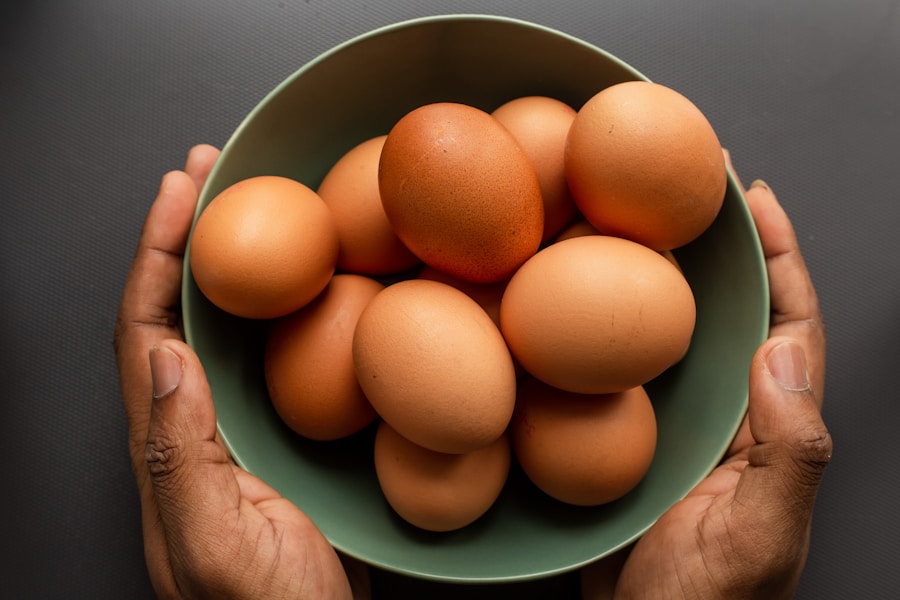
A flax-enriched, free-range, lab-tested egg with 612 mg of Omega-3 in every yolk — three times what a standard Indian egg delivers. Recommended by paediatricians for kids, by gynaecologists during pregnancy, and by athletes for sustained recovery. The same hens, the same farm, just a smarter feed and a verified result.
There is a quiet question worth asking before you spend a few rupees more on any premium food: what exactly am I paying for, and can I see the proof? Most premium-egg branding in India answers that question with adjectives — words like "farm-fresh," "natural," or "high in nutrients." Omega Reserve answers it with numbers. Six hundred and twelve milligrams of Omega-3 per egg. Independently verified. Published every month. Tested by a lab we don't own and don't pay performance bonuses to. The number itself is meaningful — three times what a commercial egg from your neighbourhood supermarket will deliver — but the more interesting story is what it took to get there.
Omega Reserve isn't a different egg. It's the same Sahya Agro free-range farm, the same five acres of pasture in Saloni Village, the same antibiotic-free protocols. The difference is what our hens eat. About 12 to 15 per cent of their daily feed is whole flax seed — the world's richest plant source of alpha-linolenic acid, the parent fatty acid that hens metabolise into the long-chain Omega-3s your body actually uses. Add free-range movement, marigold and turmeric in the feed mix, and the natural rhythm of a real farm, and what arrives in your kitchen is an egg with measurably more of the things modern Indian diets are short on. Better breakfast. Better blood work. Better bedtime.
What follows is a deep look at how Omega Reserve is made, what the lab results say, who it's particularly good for, how to cook with it, and why our regular customers won't go back. We've kept it transparent on purpose. The most luxurious thing a food brand can offer in 2026 is not packaging — it's honest evidence, in plain language. Read on, then order one carton. The rest tends to convince itself.
Omega-3 is shorthand for a family of polyunsaturated fatty acids that the human body cannot manufacture and must obtain from food. Three forms matter most: ALA (alpha-linolenic acid, found in flax, walnuts, and leafy greens), EPA (eicosapentaenoic acid, found mostly in fish), and DHA (docosahexaenoic acid, the form most concentrated in the brain and retina).
In a hen's body, dietary ALA is partially converted into EPA and DHA and deposited into the egg yolk. The richer her ALA intake, the richer the yolk's profile. Our flax-forward feed pushes that conversion much further than a standard maize-soya feed allows. The result, as our lab reports show consistently month after month, is an egg that delivers a meaningful dose of all three Omega-3 forms — most importantly, DHA, the form most useful for foetal brain development, child cognition, and adult mental health.
Independent lab measurements (averaged over 12 months, 2025) for a single 60g egg. Lower is better for shaded boxes.
Omega-3 is one of the most-studied nutrients in modern medical literature. Here's what regular intake correlates with.
Lower triglycerides and blood pressure. Reduced cardiovascular event risk in long-term cohort studies.
DHA is the most abundant Omega-3 in brain tissue. Linked to improved memory, focus, and cognitive resilience.
DHA is concentrated in retinal tissue. Adequate intake supports vision development in children and slows age-related decline.
Omega-3 supports skin barrier function, reduces inflammation-driven acne, and is associated with healthier hair shafts.
EPA is the most studied natural anti-inflammatory compound. Regular intake correlates with reduced joint and muscle stiffness.
It is, technically, an egg for everyone — but six groups of customers reach for it most often, and we've learned why.
DHA is the single most important nutrient for foetal brain and eye development between weeks 24 and 40. Many gynaecologists in Delhi and Gurugram now recommend Omega Reserve as a fish-free, low-mercury source.
Recommended by gynaecologistsChildren aged 2 to 12 are in their cognitive peak window. A daily Omega Reserve in a lunchbox or breakfast plate replaces capsule supplements with a real, whole-food version.
Daily lunchbox favouriteOmega-3 intake correlates with reduced cognitive decline, better joint mobility, and improved cardiovascular outcomes — three of the most common concerns after fifty.
Heart & joint supportFaster muscle recovery, reduced exercise-induced inflammation, and improved oxygen delivery. Many of our marathon-running and cycling subscribers are on the daily Omega Reserve plan.
Recovery nutritionFor vegetarians and ovo-vegetarians, fish-based Omega-3 isn't an option. Omega Reserve is one of the few naturally enriched, vegetarian-suitable sources of EPA and DHA available in India.
Vegetarian-friendlyIf you already eat 2–3 eggs a day, Omega Reserve quietly upgrades a habit you already enjoy — same recipes, same flavours, just a meaningfully better nutritional return.
Same eggs, more valueThe full breakdown — measured by NABL-accredited labs, averaged across 12 monthly batches in 2025. Daily Value percentages reference an Indian adult on a 2,000-calorie diet.
For pregnant women, paediatric portions, or any specific medical query, please consult your doctor; we're farmers, not physicians, and we always say so.
— Last verified Mar 2026The flavour is slightly richer and the yolk noticeably deeper. These four preparations bring out the best of it.
Six minutes in just-boiled water, peel, halve over hot buttered sourdough. The deep yolk colour and nuttiness shine without competition. Salt, pepper, chilli flakes — that's it.
Low heat, constant stirring, finish with a knob of butter and a tablespoon of cream. The Omega-3-rich yolk gives the curd a custardy texture you can taste before you can name it.
The classic Parsi/north-Indian breakfast. The richer yolk gives the bhurji a deeper colour and more body — pairs especially well with pao or buttered roti. A daily favourite among our Mumbai customers.
Boil for 9 minutes, peel, halve, salt-and-pepper. One Omega Reserve hits a child's full daily Omega-3 target. Pack with chapati and a slice of cucumber — done.
Subscription customers save 10%, get free replacement of cracked eggs without a deadline, and lock today's price for the next twelve months.
Almost every premium-egg brand in India puts a number on the carton. Almost none publish their lab reports. We do — every month, on a public page, with the lab's name, the batch number, and the date of testing visible to anyone who cares to check. We work with two NABL-accredited independent labs based in Delhi and Bengaluru on a rotating schedule, so no single lab influences our averages.
The number on this page — 612 mg of Omega-3 per 60g egg — is the trailing 12-month average. Individual batches range from 588 mg to 642 mg depending on seasonal feed variations. We print the exact batch number on every carton so you can match a specific carton to its corresponding test report. That's about as honest as a packaged food brand can practically be.
View public lab reports →Three voices from the 12,800 families who order Omega Reserve every month — paediatrician, pregnant mother, and an athlete.
The ten most-asked questions, with the answers we'd actually give a friend.
Omega Reserve eggs contain 612 mg of Omega-3 fatty acids per egg — roughly three times the amount in a conventional Indian egg. This enrichment comes naturally through a flax-seed forward feed our hens eat, not through any post-laying additive or yolk injection. The yolk is noticeably deeper in colour, the texture richer, and the nutritional profile measurably stronger. Every batch is independently lab-tested, and we publish results monthly.
Yes — and recommended by paediatricians, gynaecologists, and nutritionists across India. The Indian Council of Medical Research suggests 250–500 mg of Omega-3 daily for adults. One Omega Reserve egg delivers 612 mg in a clean, whole-food form. Two eggs comfortably exceed daily needs without any of the contaminant concerns associated with fish-based Omega-3 (mercury, microplastics, sustainability worries).
It isn't added to the eggs — it's added to what our hens eat. Our Omega Reserve hens receive a feed where 12–15% of their diet is whole flax seed, alongside the standard organic mix of maize, bajra, soybean, sunflower, and marigold. Flax is the world's richest plant source of alpha-linolenic acid (ALA), which the hens metabolise and pass into the yolk. This is the same natural pathway wild birds use; we just optimise the inputs.
Absolutely — they are among our most enthusiastic customers. Omega-3, particularly DHA, plays a critical role in foetal brain and eye development during pregnancy. Many gynaecologists recommend Omega Reserve as a safe, low-mercury alternative to fish during pregnancy. The eggs are pasteurisation-ready, antibiotic-free, and FSSAI-certified for direct consumption. As always, consult your doctor for any specific dietary plan.
Yes. Children aged 2 to 12 are in their peak window for brain development, and Omega-3 (especially DHA) is one of the most-studied nutrients for cognitive function, focus, and behavioural balance. A daily Omega Reserve egg in a child's breakfast or lunchbox delivers a bioavailable dose without supplements or fish-oil capsules. Many of our regular families joined Sahya Agro specifically for their kids.
Three reasons. First, the flax-enriched feed costs us about 2.4× more per kilogram than our standard organic feed. Second, the hens lay slightly fewer eggs on this richer diet — quality over quantity. Third, every batch is lab-tested for Omega-3 content (most brands skip this verification step entirely). At ₹20 per egg, Omega Reserve still costs less than a single Omega-3 supplement capsule, with far better bioavailability and the bonus of being actual food.
Slightly, yes — and most customers describe it as a positive. The yolk is richer, more buttery, with a deeper amber colour. There's a subtle nuttiness that most people associate with traditional country eggs. The white remains neutral and clean. In recipes, they perform identically to our other eggs; in simple preparations like sunny-side-up or soft-boiled, the flavour difference is unmistakable.
We publish our independent lab reports publicly on our website — every batch, every month, dating back to 2022. The testing is done by NABL-accredited labs that we don't own and don't pay performance bonuses to. You can also request a copy of the most recent month's report via email or WhatsApp; we'll send the PDF in under 5 minutes during business hours. Each carton's batch number ties to a specific test report.
Omega Reserve is available across all 283 Indian cities we serve, all 1,475 Haryana villages, and all 56 Gulf cities. Same-day or next-day delivery in Delhi-NCR and Haryana, 2–3 days for metro cities, 3–5 days for Tier-2 cities, and 4–7 days for Gulf destinations. The eggs travel in a temperature-controlled cold chain (4–10°C) throughout the journey.
Yes — most Omega Reserve customers are subscribers. Pick a frequency (weekly, fortnightly, or monthly), a pack size, and a delivery slot. You save 10% off list price, get free replacement of any cracked eggs without a 24-hour deadline, and skip or pause anytime via WhatsApp. Cancel with one message — no contracts, no minimum tenure, no awkward retention calls.
One carton of Omega Reserve replaces an Omega-3 supplement, a fish-oil capsule, and a worry about what your kids are eating. Crack one open this Sunday morning — the rest tends to convince itself.