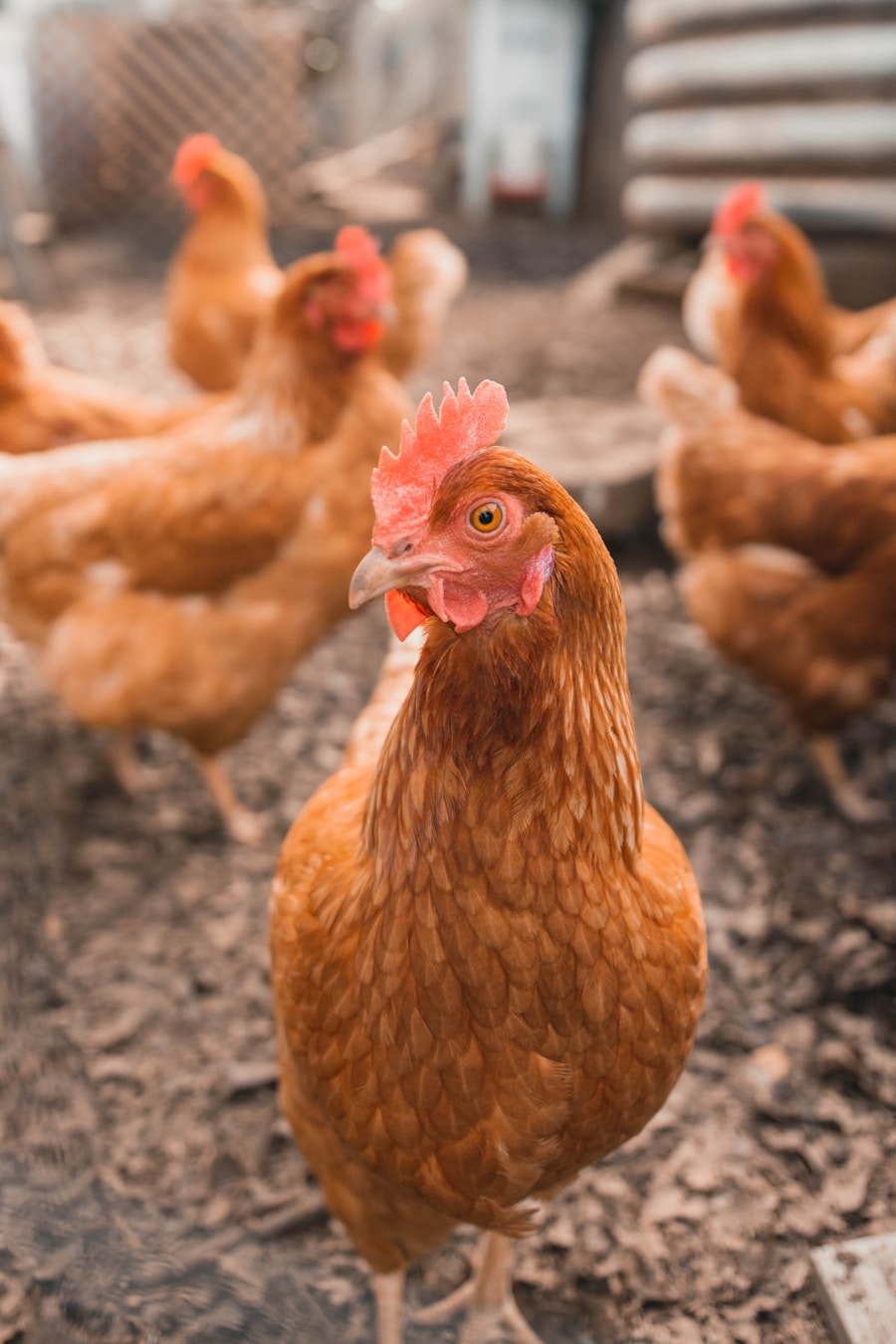
The egg that breakfast tables across Delhi, Mumbai, Bangalore, and Dubai reach for every morning. A deep russet shell, a yolk the colour of late-monsoon sunset, and flavour so rich that your first Estate Brown omelette makes every other egg in your fridge feel like a rough draft. Rhode Island Red hens, certified-organic feed, hand-graded the morning you eat them.
If you were to ask a French chef, an Italian nonna, and an Indian grandmother what makes an egg truly great, all three would give you the same answer by instinct — the colour and height of the yolk when you break the shell. A good egg stands up on the pan. It doesn't slump. The yolk holds itself together like something that was alive until very recently, because it was. That upright, amber, resilient yolk is the single most reliable signal of a well-kept hen and a well-fed diet, and it is the thing our Estate Brown eggs are known for above everything else. Customers write to us every week saying some version of the same sentence — "I didn't realise eggs could look like this" — and that reaction never stops being a quiet pleasure to receive.
Estate Brown is our flagship everyday egg, and it comes from the breed that anyone who grew up on a working farm in pre-industrial India would recognise instantly — the Rhode Island Red. Developed in the 1890s in the coastal town of Little Compton on the eastern seaboard of the United States, the Rhode Island Red was bred specifically to be the ideal homestead hen. She lays prolifically through winter, forages enthusiastically, tolerates heat and cold with equal grace, and produces a medium-large egg with a thick, rich, deeply pigmented yolk. Rhode Island Reds arrived in India in the early 1930s via the first wave of colonial-era agricultural exchanges, and within two decades they were the backbone of the country's rural poultry economy — before cages, before antibiotics, before the industrial egg that the 21st century inherited.
Our Rhode Island Reds at Sahya Agro live on a five-acre free-range pasture at the southern edge of Saloni Village in Haryana's Mahendragarh district. They roam from sunrise to dusk across four rotating paddocks, forage for insects and green shoots, dust-bathe in the loose red earth of the Aravalli foothills, and sleep in raised barns at night under native neem and shisham canopy. They eat a feed mix we've refined over six years — certified-organic maize, bajra, soya, sunflower, 6% roasted flaxseed, 2% marigold petals, and crushed oyster shell for calcium — which gives their eggs the deep amber yolk (Roche scale 13, compared to 6–8 for commercial eggs) and the full, nutty flavour that has become our signature.
But what we're actually selling is not a brown egg, or a Rhode Island Red egg, or a premium organic egg. We're selling an egg that is unhurried. Every Estate Brown carton you receive was laid within 48 hours of reaching your kitchen — compared to the 10 to 30 days that supermarket eggs typically spend in warehouses and shelves before you take them home. The hens that laid them were not forced into 16-hour lay cycles under artificial light. They were not given antibiotics to prevent diseases that cage-housing would have caused. The people who hand-graded each egg did so in morning light, on a wooden table, with a lamp and a practised eye. This is the flagship because it represents every choice we make at Sahya Agro in its most complete form — a carton of twelve small edible arguments for doing things the slower way. Welcome to Estate Brown.
Nine specifications that summarise Estate Brown — no fluff, no filler, just the facts we'd want if we were buying this ourselves.
She stands about 45 centimetres tall, weighs three kilograms at maturity, and wears a plumage the colour of polished mahogany — so dark a red it tips towards black in morning shadow. Her comb is a single-combed scarlet. Her legs are yellow, her eyes alert, her walk unhurried. She was bred in the 1890s by a group of Massachusetts and Rhode Island farmers who wanted a hen that would lay consistently through New England winters, forage capably in summer, and feed a family without complaint. They succeeded so completely that within forty years she had become the most common chicken on earth.
What makes her ideal for our farm — and for your breakfast — is her temperament. Rhode Island Reds are intelligent, curious, and remarkably calm. They adapt to the humans around them, learn their routines, and communicate through a vocabulary of clucks and soft trills that our grading-room supervisor Sunita swears she can almost translate. A well-kept Rhode Island Red hen will lay 250 to 280 eggs per year, continuing productively for five to seven years — a fraction of the output that caged commercial layers are forced into over their 18-month industrial lifespan, but a schedule that respects what a hen's body is actually designed to do.
Our flock numbers around 2,100 Rhode Island Reds — alongside 1,100 Leghorns who produce our Pearl White eggs, and 300 specialty hens raised for our Omega Reserve line. Each Rhode Island Red in our flock lives until she stops laying, at which point she retires to a quieter corner of the farm to see out her days. We don't slaughter spent layers. We think that's the least a hen deserves for the six years of breakfasts she has made possible.
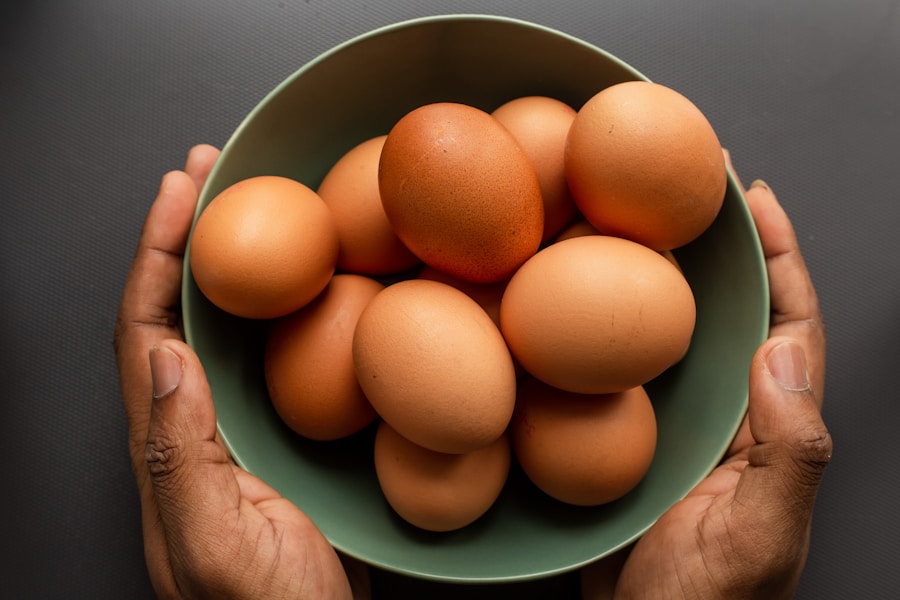
We love our Estate Brown eggs. But we don't sell them on the back of a myth — here are four gentle corrections to the stories the Indian egg aisle has been telling for decades.
Completely untrue. Shell colour is determined by a single gene in the hen — it has zero effect on nutrition, protein content, cholesterol, or flavour. A brown egg and a white egg from the same farm, same feed, same conditions will be nutritionally identical. This myth dates back to 1980s marketing in the West that linked brown shells to "rustic" and "natural".
Because Rhode Island Reds eat slightly more than Leghorns (they're bigger birds), their yolks accumulate marginally more carotenoids and fats — giving a deeper colour and richer mouthfeel. So the taste difference is real, but it comes from breed behaviour, not shell colour. A white-egg Leghorn fed the exact same diet would taste almost identical.
Also untrue. A caged brown-egg battery farm and a caged white-egg battery farm produce identical industrial eggs — colour is irrelevant to freshness, farming ethics, or welfare. What makes an egg "farm fresh" is time from lay to table, feed quality, and housing conditions. An egg can be brown and three weeks old, or white and laid yesterday.
Because our hens are genuinely free-range, eat certified-organic feed, receive no antibiotics, are hand-graded, and reach you in ≤48 hours. Those five facts — not shell colour — are what distinguish us from every commercial egg at your nearest supermarket. We'd hold the same standards even if we ran a white-egg-only farm. The shell is just the envelope; the egg inside is what matters.
We could tell you about our farming philosophy. Or we could tell you exactly what happens the first time you crack open an Estate Brown egg onto a hot pan — and what it will look like.
Commercial eggs spread and run because their yolk vitelline membrane is weakened by storage age. Our Estate Brown, at under 48 hours old, produces a yolk that holds a dome shape on the pan for at least 60 seconds of cooking — the classic mark of a genuinely fresh egg and the easiest home test for quality.
Fresh albumen is thick, gelatinous, and clings to the yolk rather than spreading. This is what lets Estate Brown poach beautifully (the white wraps the yolk), fry cleanly without leaking, and deliver that firm "bite" through a sunny-side-up egg. Older eggs — even organic ones — lose this within 10–14 days of lay.
Our hens' varied pasture diet — insects, green shoots, marigold petals, roasted flax, maize — builds a richer fatty-acid profile in the yolk. The result is a deeper, rounder flavour that cookbook authors often describe as "eggy" in a way factory eggs simply aren't. First-time customers taste it. Even kids notice.
Any dish where the egg is the hero. If your recipe calls for an egg you can actually see and taste — these are the ones.
The classic Estate Brown dish. A tall yolk, a crisped white edge, salt and black pepper. No dish showcases a truly fresh egg more honestly.
The deep amber yolk against the red-pepper and tomato base is almost cinematic. Bread torn by hand, dipped in. Weekend perfection.
French technique, Indian eggs. Three Estate Browns, cold butter, low heat, 90 seconds. Chef-quality breakfast in under five minutes at home.
Estate Brown's rich yolk gives custards a silkier mouthfeel and a deeper natural yellow. Perfect for crème caramel, bread pudding, and kulfi.
Larger packs bring down the per-egg price. Subscribers save another 10%. No hidden fees, ever.
Three customers, three kitchens, three cities. Lightly edited for length — never for substance.
Nine of the questions our WhatsApp desk hears most — with honest, practical answers.
No. The colour of an egg's shell is determined purely by a gene carried by the hen — it has absolutely no effect on nutrition, flavour, or quality. A brown egg and a white egg from hens raised in identical conditions will be nutritionally identical. What matters is how the hen lives and what she eats.
That said, Estate Brown hens at Sahya Agro (Rhode Island Reds) tend to produce slightly larger eggs with a marginally deeper yolk colour because of their breed-specific feed conversion, but this is a breed trait, not a brown-vs-white story. We sell both Estate Brown and Pearl White, and we're equally proud of each — they're just different eggs for slightly different uses.
We use heritage Rhode Island Red hens — a breed developed in the coastal town of Little Compton in the US state of Rhode Island during the 1890s and introduced to India in the early 1930s. They are dual-purpose birds, known for robust health, calm temperament, excellent foraging instincts, and consistent egg production across seasons.
Our flock of approximately 2,100 Rhode Island Reds lives on 5 acres of open pasture with rotating grazing paddocks every 10–14 days. They retire to a quieter corner of the farm when they stop laying, rather than being slaughtered as spent layers — a choice that matters to us.
Five concrete differences, each measurable:
1. Our hens are genuinely free-range (not cage-free with an "outdoor access" loophole). 2. They eat certified-organic feed (not commercial mash with synthetic additives). 3. They never receive antibiotics (most commercial farms use them preventively). 4. Each egg reaches you within 48 hours of being laid (supermarket eggs can be 15–30 days old). 5. Every egg is hand-graded by a human, not a machine.
The difference is visible when you crack one open: a firmer white, a taller yolk that holds its shape on the pan, and a deeper golden-amber colour. Most first-time customers notice within the first breakfast.
The price reflects what it actually costs to raise Rhode Island Reds on certified-organic feed with real pasture access, pay our farm team fair wages, maintain cold-chain delivery, and publish third-party lab reports. Caged commercial eggs at supermarkets sell for ₹6–8 per egg because their production externalises costs onto hen welfare, antibiotic use, and consumer health.
At ₹14 per Estate Brown egg, we believe the math is honest: you pay roughly ₹2 extra per egg for a product that is measurably different in flavour, nutrition density, and ethical standing. Subscribers receive a 10% loyalty discount, bringing the per-egg cost down to ₹12.60 — and the Tray of 30 brings it down to ₹13 flat.
Stored refrigerated at 4°C, our Estate Brown eggs maintain peak freshness for 21 days from the batch date printed on every carton, and are safely consumable for up to 45 days. Always store them pointed end down in their original carton — this keeps the air cell stable and the yolk centred.
To test freshness at home, place an egg in a glass of water: fresh eggs lie flat on the bottom, older ones tilt, and spoiled ones float. Avoid washing eggs until just before use — the natural protective coating (cuticle) keeps moisture and bacteria out.
Almost everyone does, and most notice within two breakfasts. The first thing people mention is colour — our yolks are a deep golden-amber (Roche scale 13) compared to the pale yellow (Roche 6–8) of commercial eggs, which comes from our hens' diet of marigold petals, maize, and flaxseed.
The second is structure — the yolk stands visibly taller and the white is firmer, which means sunny-side-up eggs don't run flat and omelettes fold more cleanly. The third is flavour — richer, more "eggy", with a subtle nuttiness from the flax in our feed. A single blind taste-test breakfast at home is usually convincing enough.
Yes, absolutely — in fact, many obstetricians across Delhi and Gurugram specifically recommend pasture-raised organic eggs during pregnancy because they carry no antibiotic residue, higher levels of choline (critical for foetal brain development), and more usable Vitamin D.
Always cook eggs thoroughly during pregnancy (both white and yolk fully set) to eliminate any theoretical Salmonella risk. If you're looking for additional Omega-3 for foetal brain development, we recommend our Omega Reserve eggs, which contain 3× the ALA content of standard eggs.
Estate Brown works beautifully for most home baking — cakes, cookies, brownies, muffins, quiches, and rich custards. The deeper yolk adds richness that's often an advantage in baking.
Where Pearl White has a structural advantage is in recipes where the egg white has to hold its peak for a long time: macarons, angel food cake, Italian meringue buttercream, and soufflés. The difference is due to Leghorn albumen structure, not shell colour. For 95% of home cooks, Estate Brown is the everyday egg — Pearl White is the specialist tool you reach for when a recipe demands it.
We deliver direct-to-door across 283 Indian cities and 56 Gulf cities. The fastest way to order is WhatsApp at +91 90917 92917 — share your pincode and we'll confirm availability within minutes.
Delivery times are 24 hours for Delhi-NCR and Haryana, 2–3 days for metro cities like Mumbai, Bangalore, Hyderabad, and Chennai, 3–5 days for Tier-2 Indian cities, and 4–7 days for Gulf destinations. Every shipment travels in unbroken 4–10°C cold chain, so freshness is preserved across the journey.
One WhatsApp message. Delivery as soon as tomorrow for most cities. First-time customers get a handwritten thank-you from our team.